Prototype Development Log
Pneumatic Downforce Soil Recovery Module
What
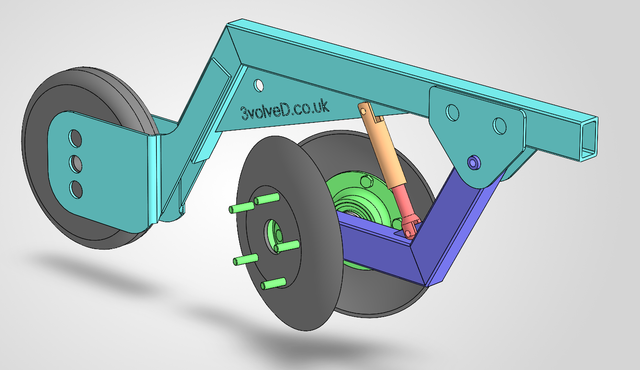
Pneumatic downforce disc recovery module mounted behind a tine and press wheel assembly.
Why
To evaluate active soil containment and replacement over traditional implements that just spread dirt flat across the top.
Current Status
Rev A layout complete. Rev B is under development focusing on pivots, service access, and standard components.
Next Up
Define operational load cases, compile manufacturing drawings, run a test fitment, and begin field trials.
The Mechanics of Soil Return vs Surface Leveling
When a standard seeding tine moves through the ground, it aggressively displaces the soil structure, pushing it outward and away from the center path. This action leaves behind a loose, uneven finish and creates an empty void directly over the seed. The resulting disruption causes highly inconsistent soil reconsolidation right before the packer wheel arrives.
Most conventional industry setups try to handle this using passive covering tines or leveling boards. However, these systems function on a basic cosmetic principle: they simply drag and spread the displaced dirt sideways until the surface looks flat. Spreading soil flat across the top does not actually solve the sub surface structural void left behind.
Following home farm trials with a loop of heavy chain on a Horsch CO4 drill, which worked well at collecting loose dirt, we arrived at a fundamental engineering distinction: Instead of just smoothing the surface flat, could a targeted mechanical module actively trap that side flung throw and return it directly into the open slot it came from?
True Furrow Slot Reconsolidation
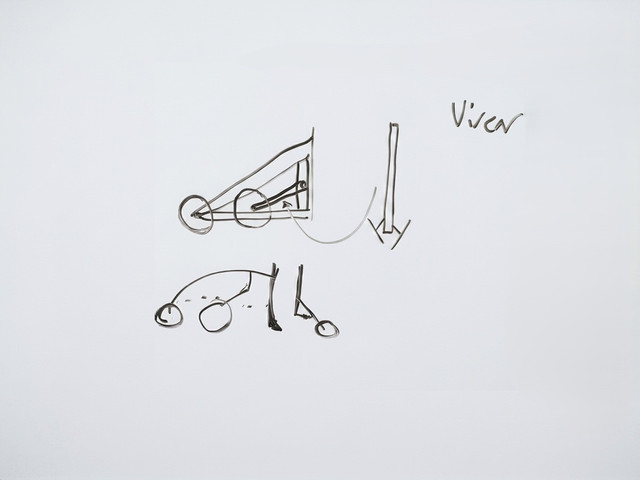
The fundamental objective of this standalone component module is focused containment rather than field leveling. Placed directly behind the cutting tine, it must catch the moving soil profile immediately and guide it straight back down into the open furrow slot before the packer wheel rolls over the area.
To accomplish this, the system disc layout relies on direct material redirection. By utilizing the forward draft force of the tool, the staggered disc array channels the escaping dirt inward, rebuilding the core seed zone profile from the sides rather than relying on surface dragging elements.
Explicit Technical Requirements
- Must mount securely behind a standard tine within a compact clearance envelope.
- Must withstand heavy impact loading and continuous field vibrations.
- Requires adjustable downforce limits (to be finalized after completing load cases).
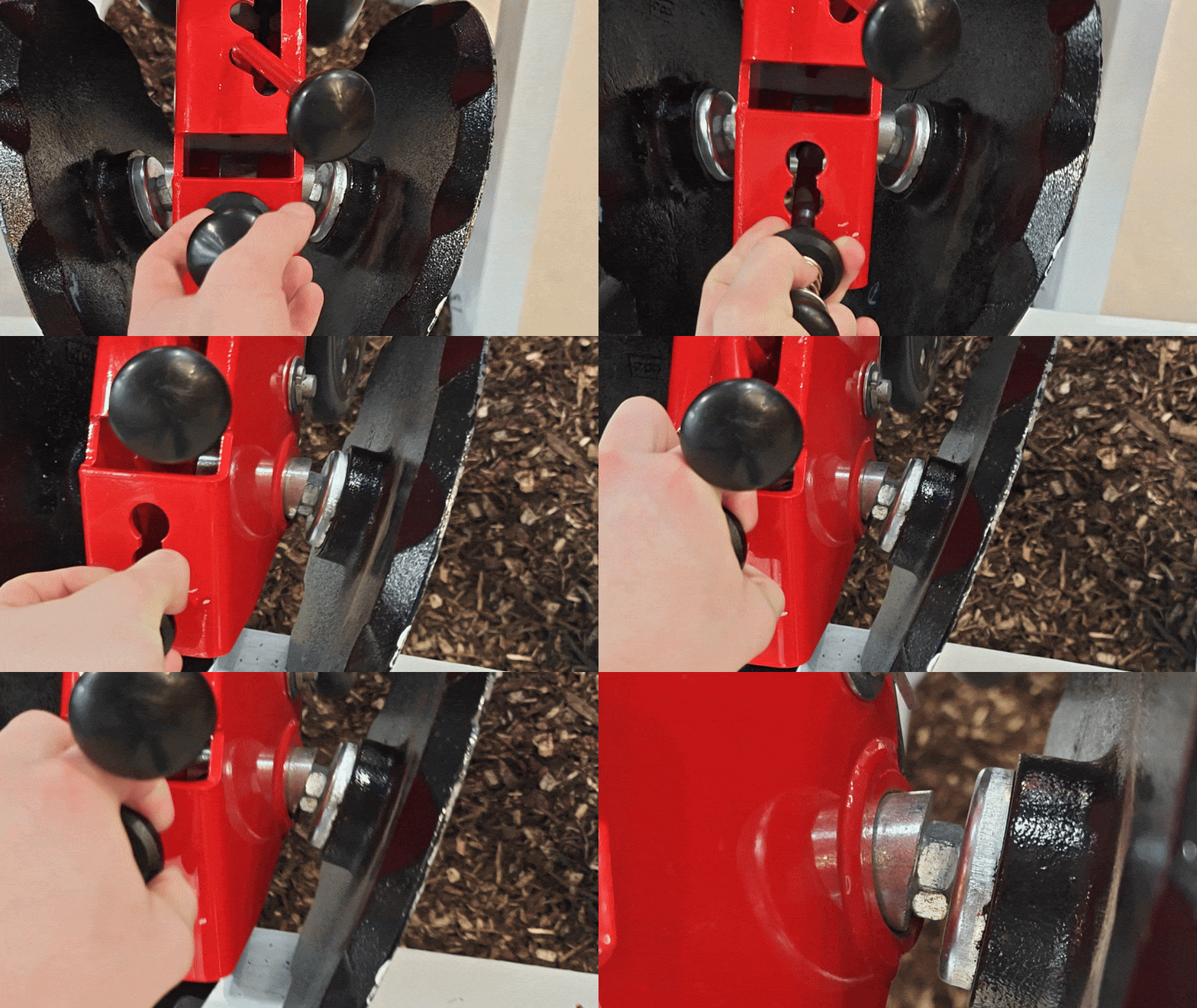
- All primary wear items must be easily replaceable (discs, bearings, pins, and bushes).
- Service access points and grease nipples must be natively integrated into the design.
- Fabrication friendly construction, utilizing laser cut, folded, and welded plates with minimal machine work.
The Rev A Proof of Concept
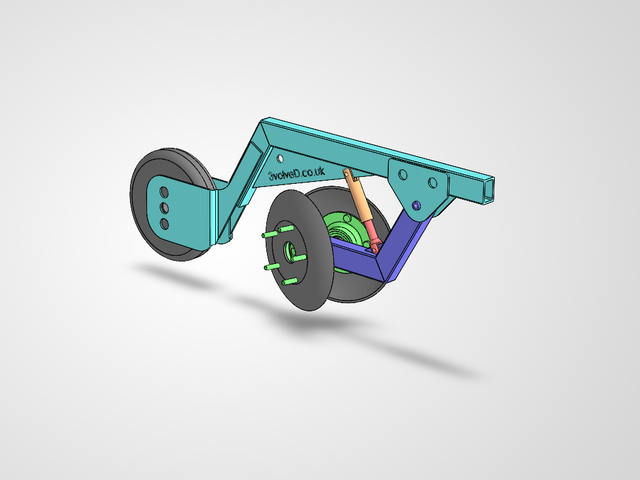
The current Rev A model is a working proof of concept built to validate physical layout space, link kinematics, and mechanical adjustability. To maximize skills development and retain complete design ownership, every single component within this framework was modeled from a completely blank canvas, excluding the standard nut and bolt fasteners.
The mechanism positions two staggered, angled discs directly behind the tine to collect incoming soil throw and guide it inward toward the slot line. A trailing press wheel runs at the rear to pack the soil down and set a definitive working depth. The entire linkage is arranged so that forward pulling forces naturally encourage the unit to run deep in its work zone instead of skipping over hard spots.
Disc downforce is applied directly through a compact pneumatic cylinder. Regulating the system air pressure provides an incredibly simple method for field adjustment. Because air is naturally compressible, it supplies built-in mechanical compliance, allowing the discs to rise safely over stones or soil variations.
Bearing Engineering & Implement Scalability
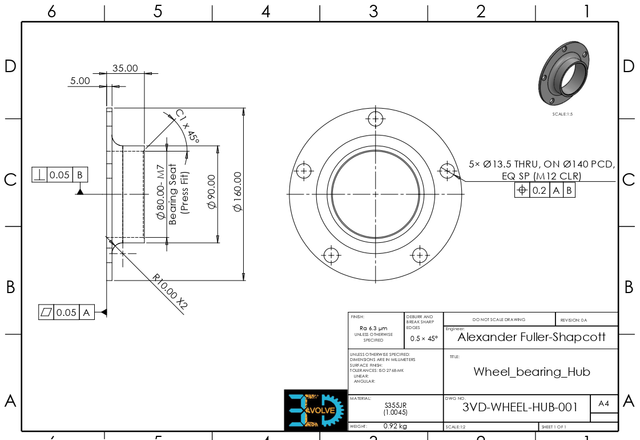
Transitioning a toolbar concept into a reliable, long-lasting agricultural implement requires a focus on internal rotational wear and broader system expansion across full toolbar widths.